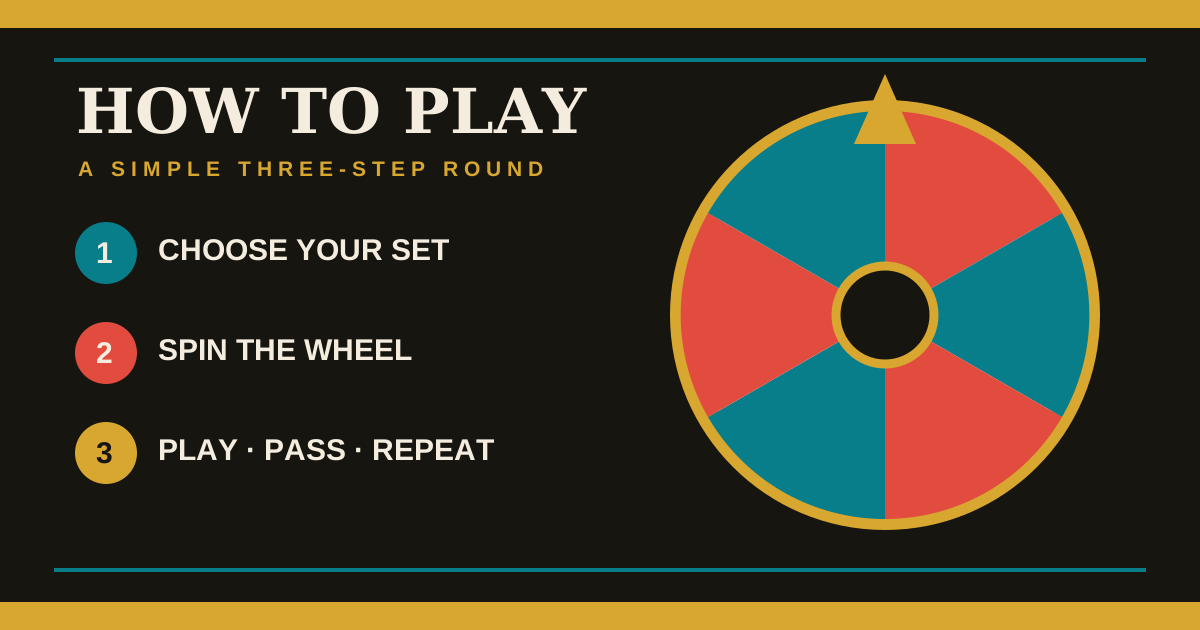
Truth or Dare is a turn-based conversation game. On each turn, a player chooses Truth or Dare, receives a matching prompt and either answers honestly or completes the challenge. That is the complete core rule. Everything else—players, intensity, scoring and how long a round lasts—can be adjusted to suit the group.
The easiest way to run a good game is to make three decisions before the first turn: which prompt set fits the people present, which subjects or actions are outside the game, and how anyone can pass. Once those decisions are visible, the wheel can handle random selection while the group focuses on playing.
The quick-start version
For a game you can begin in less than five minutes, use this order:
- Gather two or more players and choose a host.
- Pick one question set that fits everyone in the room.
- Begin at Safe or Playful intensity rather than the highest setting.
- Agree that Skip and Spin again are always allowed.
- Add player names if you want automatic turn rotation.
- Spin, read the result aloud and complete or skip the prompt.
- Continue until the agreed final round.
No score is required. If your group enjoys competition, award one point for a completed turn, but never remove points for passing. A pass should remain a neutral choice rather than a strategic punishment.
Choose a question set before choosing intensity
The category determines what relationships the prompts assume. Party works for a mixed gathering. Friends can use more shared history. Couples is designed for two people in an established relationship. Crush keeps the tone lighter when the relationship is not defined. Long Distance favors tasks that can happen across a call, and Kids uses a separate family-safe pool.
When a group could fit several categories, use the broadest safe match. Five old friends and one new guest usually fit Party better than Friends because not everyone shares the same history. A family group with children should use Kids even when adults are playing too.
Intensity comes next. Safe prompts are easy to answer or perform. Playful prompts ask for more personality or silliness. Bold prompts can feel more revealing, but they still do not cancel anyone’s boundaries. Treat intensity as a ceiling the whole group accepts, not a ladder every game must climb.
Use one predictable turn structure
A simple turn has four parts. First, identify the current player. Second, let that person choose Truth, Dare or Mixed if the wheel is making the choice. Third, read the selected prompt exactly once and give the player a moment to decide. Fourth, mark the turn complete, skip it or spin again.
Avoid negotiating the prompt in front of the group. If it does not fit, replace it quickly. Long discussions about whether someone “should” be comfortable create more pressure than the original question. The host can quietly note a poor prompt and remove it from a custom list later.
Automatic player rotation is useful for a large group because it prevents confident players from taking every turn. For two people, simply alternate. For a classroom or family event, the host can invite volunteers for the first round and switch to rotation once everyone understands the format.
Decide the pass rule out loud
“Anyone may skip any prompt without explaining” is the most useful house rule. Say it before playing, not after someone becomes uncomfortable. Players can also ask to change a physical dare into a verbal or seated version. A person may stop midway through an action even if they first agreed to it.
A strong pass rule protects more than obvious sensitive subjects. Someone may avoid a food prompt because of an allergy, a movement because of pain, or a personal question because another player does not know the context. The group does not need the private explanation in order to respect the choice.
Do not replace a skipped prompt with a more difficult one. Do not require a penalty, drink, secret or extra turn. Press Spin again and keep the game moving at the same tone.
Adapt the game to the number of players
With two players, use a slower rhythm and allow follow-up conversation after a Truth. Agree whether affectionate contact belongs in the game before choosing romantic categories. A ten-turn round is often enough for a date-night activity.
With three to six players, use normal rotation. Mixed mode keeps Truth and Dare varied, while short dares prevent one person’s turn from taking over the evening. Twenty to thirty minutes usually creates a complete session without exhausting the prompt style.
With a larger party, appoint one host and keep turns compact. The host reads prompts, watches the room and announces when only three turns remain. Split into smaller circles if people cannot hear one another or if the waiting time becomes longer than the active play.
For remote play, confirm that everyone has privacy and can hear the prompt. Use Long Distance or preselect dares that can be completed on camera or through voice. Never assume screenshots, recordings or social posts are part of the game.
Keep dares inside the current room
A useful dare entertains the people who agreed to play. It should not depend on strangers, unlocked phones, public accounts or property that could be damaged. Before a dare begins, check the available space, the player’s ability and whether any recording is planned.
Safe examples include inventing a ten-second advertisement, drawing with the non-dominant hand, imitating a fictional character or narrating an ordinary object dramatically. The challenge comes from playful performance, not danger or lasting embarrassment.
Truth questions deserve the same care. Avoid demands for passwords, private messages, addresses, financial information or disclosures about another person. Honest play does not mean unlimited access to someone’s private life.
End while the game still has energy
Announce a final round instead of waiting for attention to fade. Let each player choose Truth or Dare for their last turn, or make the final spin a group prompt. A deliberate ending gives the session a shape and reduces the temptation to make later prompts more extreme just to regain attention.
Reset the local session if the device is shared, especially after adding custom player names or prompts. The game stores session information in the current browser so it can recover from a refresh; it does not need anyone’s answers.
Frequently asked questions
Can two people play Truth or Dare?
Yes. Alternate turns, choose a relationship-appropriate set and agree on physical and personal boundaries before starting. Two-player games often work best with more conversation and fewer performance-heavy dares.
Does a player have to choose before the wheel spins?
No. Use Mixed mode when the random choice is part of the fun, or select Truth only or Dare only when the player wants control. The group can switch modes between turns.
What happens when the prompt pool runs out?
Start a new session, change categories or add a reviewed custom list. A no-repeat session makes each result feel fresh, but restarting is fine once everyone knows the pool has reset.
What is the best first rule for beginners?
Make passing easy. When players know they control their participation, they are more likely to answer openly, try silly challenges and keep the game welcoming.