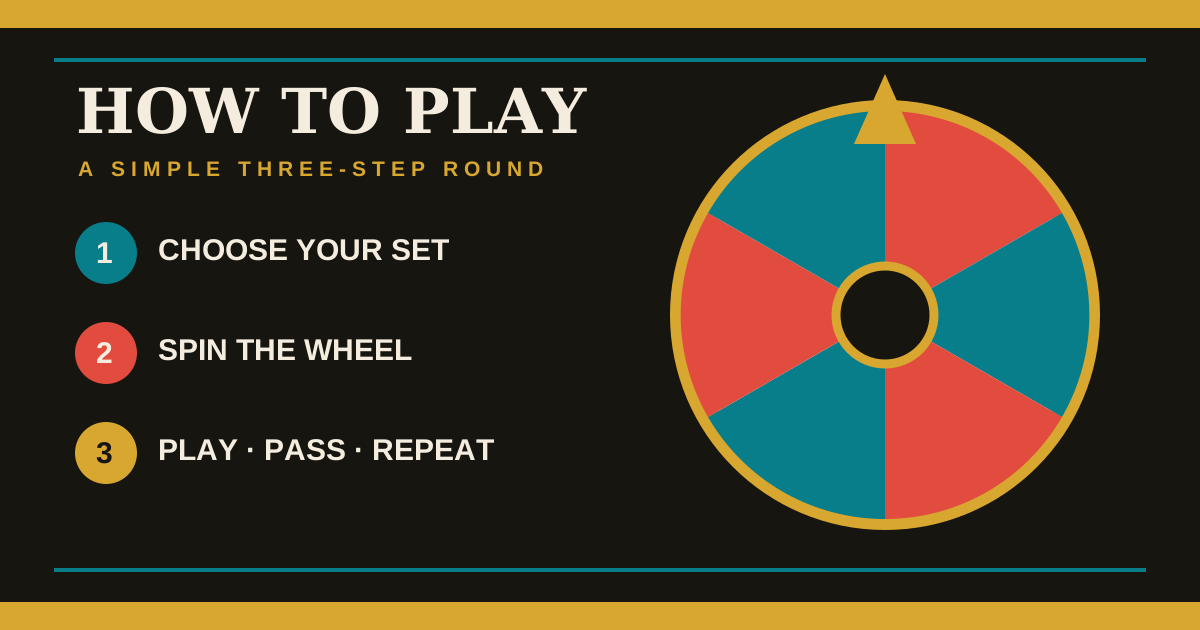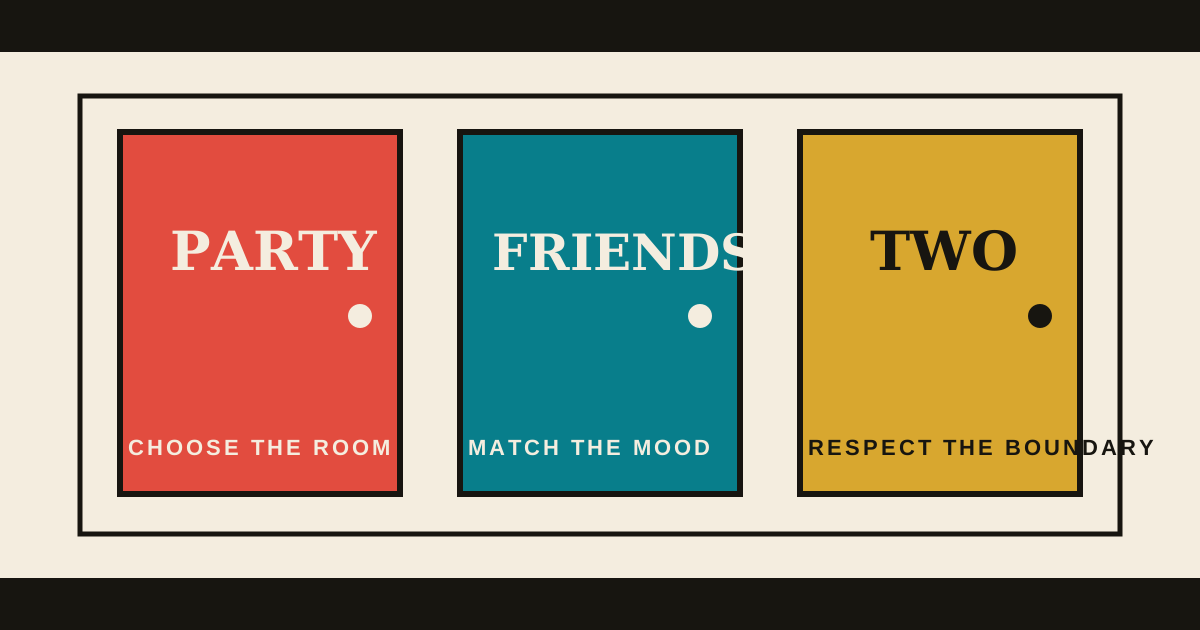
The right Truth or Dare set matches the relationship, setting and energy already present. It should not force a group to perform a label. Before choosing, answer three questions: Who is playing? Where are they playing? What is the highest intensity every player accepts? Those answers are more useful than choosing whichever category sounds boldest.
Start with relationship, setting and energy
Relationship tells you how much shared context the prompts can assume. Setting tells you whether movement, noise or a video call is practical. Energy describes how personal or performative the group wants the round to feel. Choose the narrowest set that fits all three, then begin at Safe and adjust together.
If the group contains mixed relationships, use Party or Friends rather than a romantic category. If ages vary, choose the set that protects the youngest player. When in doubt, browse prompts before placing them on the wheel.
Party is for mixed-group momentum
Choose Party for birthdays, game nights or gatherings where some people may have just met. Its job is to create quick participation without depending on deep history. The best Party prompts are easy to understand, short to complete and entertaining for the whole room.
Keep the energy at Safe for introductions. Playful works once everyone is joining in. Avoid using a party setting as an excuse for public posting, unwanted calls or jokes aimed at people who are not playing.
Friends is for stories and shared history
Choose Friends when the group already has trust and wants memories, opinions and inside jokes. This set can support a longer conversation than Party because players understand one another’s context. It still should not treat phone access, private messages or humiliating revelations as proof of friendship.
Friends is also a sensible fallback for a mixed group that does not fit a gendered or romantic label. Use selected prompts if the full library feels broader than the occasion.
Couples, Girlfriend and Boyfriend are for established relationships
Couples is the balanced two-player starting point. Girlfriend and Boyfriend provide more specific wording for people who prefer those formats, but the core rule is the same: a relationship does not create an obligation to answer a romantic question or complete physical contact.
Choose these sets for a date at home, a road-trip break or a deliberate conversation. Agree on whether former relationships, future plans or physical affection are out of scope. The strongest rounds mix affectionate observations with light performances instead of escalating every turn.
Crush should feel like an icebreaker, not a test
Choose Crush when interest may be mutual but the relationship is not defined. Start at Safe. Good prompts explore favorite experiences, first impressions and easy preferences. They should leave space for ambiguity.
Skip anything that asks for a declaration, proof of attraction or public action. If a question would make sense only after exclusivity has been established, it belongs in a different set. A Crush round succeeds when both people learn something without needing to negotiate the relationship inside the game.
Long Distance must work on the current call
Choose Long Distance when players are in different places. Its Truths can support connection across time zones; its Dares should be possible through conversation, camera or a simple action in each person’s own space.
Do not require recordings, surprise posts or contact with third parties. Check the time, privacy and physical surroundings on both sides before an active dare. The result should improve the call, not create tasks for someone after it ends.
Girls’ Night and Boys’ Night are social formats, not stereotypes
These sets exist because people commonly search for those group labels. The prompts focus on friendship, creativity, teamwork and honest conversation rather than claiming every girl or boy behaves the same way. They work best when the players themselves identify with the format.
For a mixed group, Friends is usually clearer. For children, use Kids regardless of the group label because its content is separately reviewed for family play.
Kids needs its own pool and adult judgment
Choose Kids for family rooms, classrooms or younger groups. The set uses Safe, Everyone prompts, but an adult should still check the physical space and adapt movement for age or ability. Passing must be easy, and the game should never request passwords, addresses, school details or online posting.
Let children browse a smaller selection with an adult before play. Participation in choosing the list makes the boundaries easier to understand during the round.
Browse first when the room is specific
The full library is useful for discovery, but a selected list is better for a graduation, quiet date, small apartment or short video call. Filter by Truth, Dare or energy, check the exact wording and send only suitable prompts to the wheel.
There is no penalty for switching sets. A host who changes direction after reading the room is making a better game. Start with fit, keep the pass rule visible and let the group—not the category name—set the pace.